
Luca Benini
Designing Open Platforms for the Embodied AI Era
AI is accelerating into the generative era with increasing capabilities being « embodied » everywhere, from earbuds to cars to humanoid robots. Embodied AI needs to tackle major challenges in energy efficiency, safety, security, and real-time predictability, while curtailing computational complexity. In this talk I will focus on chip and system design for embodied AI, moving from ultra-low power AI-enhanced MCUs for smart wearables and nano-robots to large 3D-integrated systems-in-package for autonomous vehicles, humanoids and satellites. I will emphasize the strategic importance of AI-enhanced co-design flows and of an open-platform (hardware and software) approach to ensure fast innovation cycles as well as long term sustainability, safety and security.
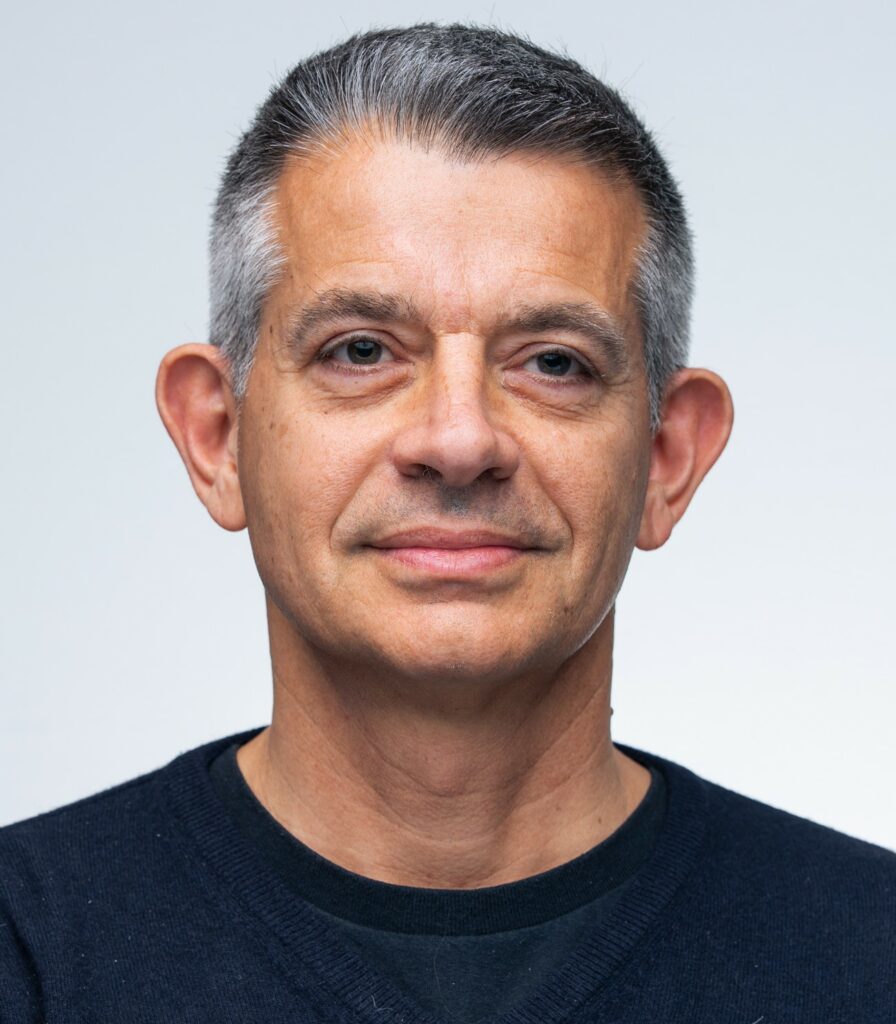
Luca Benini holds the Chair of Digital Circuits and Systems at ETHZ and is Full Professor at the Università di Bologna. He received a Ph.D. from Stanford University. His research interests are in energy-efficient parallel computing systems, smart sensing micro-systems and machine learning hardware. He is a Fellow of the IEEE, of the ACM, a member of the Academia Europaea and of the Italian Academy of Engineering and Technology. He is the recipient of several awards including the 2023 IEEE CS E.J. McCluskey Award, and the 2024 IEEE CS Open Source Hardware contribution Award.
Jakob Hoydis

Wireless Research With Agentic AI
Jakob Hoydis is a Distinguished Research Scientist at NVIDIA working on the intersection of machine learning and wireless communications. Prior to this, he was Head of a research department at Nokia Bell Labs, France, and co-founder of the social network SPRAED. He obtained a diploma degree in electrical engineering from RWTH Aachen University in Germany and a Ph.D. degree from Supélec in France. From 2019 to 2021, he served as chair of the IEEE COMSOC Emerging Technology Initiative on Machine Learning, as well as Editor of the IEEE Transactions on Wireless Communications.
He is a recipient of the 2019 VDE ITG Johann-Philipp-Reis Prize, the 2019 IEEE SEE Glavieux Prize, the 2018 IEEE Marconi Prize Paper Award, the 2015 IEEE Leonard G. Abraham Prize, the IEEE WCNC 2014 Best Paper Award, the 2013 VDE ITG Förderpreis Award, and the 2012 Publication Prize of the Supélec Foundation. He has received the 2018 Nokia AI Innovation Award, as well as the 2018 and 2019 Nokia France Top Inventor Awards. He is a co-author of the textbook “Massive MIMO Networks: Spectral, Energy, and Hardware Efficiency” (2017). He is a 2023 Distinguished Industry Speaker of the IEEE Signal Processing Society as well as an IEEE Fellow.
He is one of the maintainers and core developers of Sionna, a GPU-accelerated open-source link-level simulator for next-generation communication systems.