
SiPS’26 Software Optimization Contest
Theme: Energy‑aware, high‑performance motion detection & tracking on a streaming image processing workload.
1. Overview
SiPS 2026 invites researchers, students, and industry developers to compete in a code‑optimization contest that balances throughput and energy efficiency on the Dalek cluster (heterogeneous, low‑power mini‑PC nodes and GPUs).
- Application – Real‑time motion detection and object tracking on video streams.
- Baseline – A reference C/C++ implementation is provided.
You may modify or replace the algorithms as long as the final detection and tracking performance meets the target rates. - Evaluation Metrics
- Throughput – frames processed per second.
- Energy Efficiency – energy per frame.
Improving detection/tracking accuracy beyond the required thresholds does not influence the ranking – the focus is strictly on energy‑aware performance.
2. Dalek Cluster
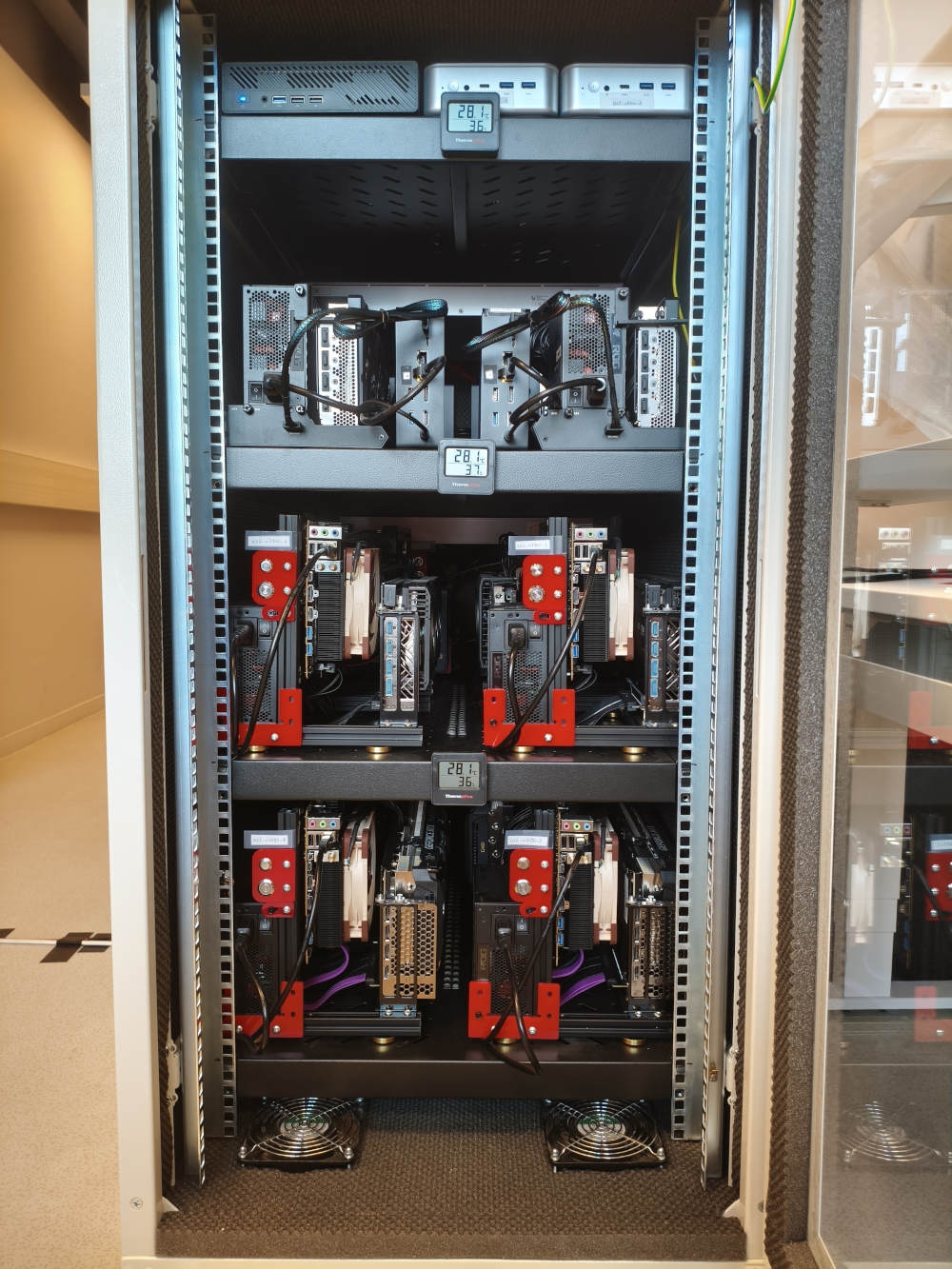
Experiments will be run on the Dalek cluster, and participants will access it via SSH.
| Feature | Description |
|---|---|
| Architecture | Heterogeneous nodes of low‑power mini‑PCs (CPU & GPU‑enabled). See the specifications of the different compute units: https://dalek.proj.lip6.fr/home_description/. |
| Energy Measurement | Custom open‑hardware platform (1000+ samples/s) measuring per‑board power on 19 V, 12 V, 3.3 V, 5 V rails and GPU consumption. Documentation: https://dalek.proj.lip6.fr/user_ncm/. |
| Account Management | A dedicated account is created for each competitor. |
| Scheduling | Resources allocated via SLURM; exact allocation (nodes, GPUs, time) will be announced TBD. |
Full documentation is available at: https://dalek.proj.lip6.fr/.
Reference paper: Dalek: An Unconventional and Energy-Aware Heterogeneous Cluster. Cassagne, A.; Amiot, N.; and Bouyer, M. August 2025. arXiv:2508.10481.
3. Motion Application
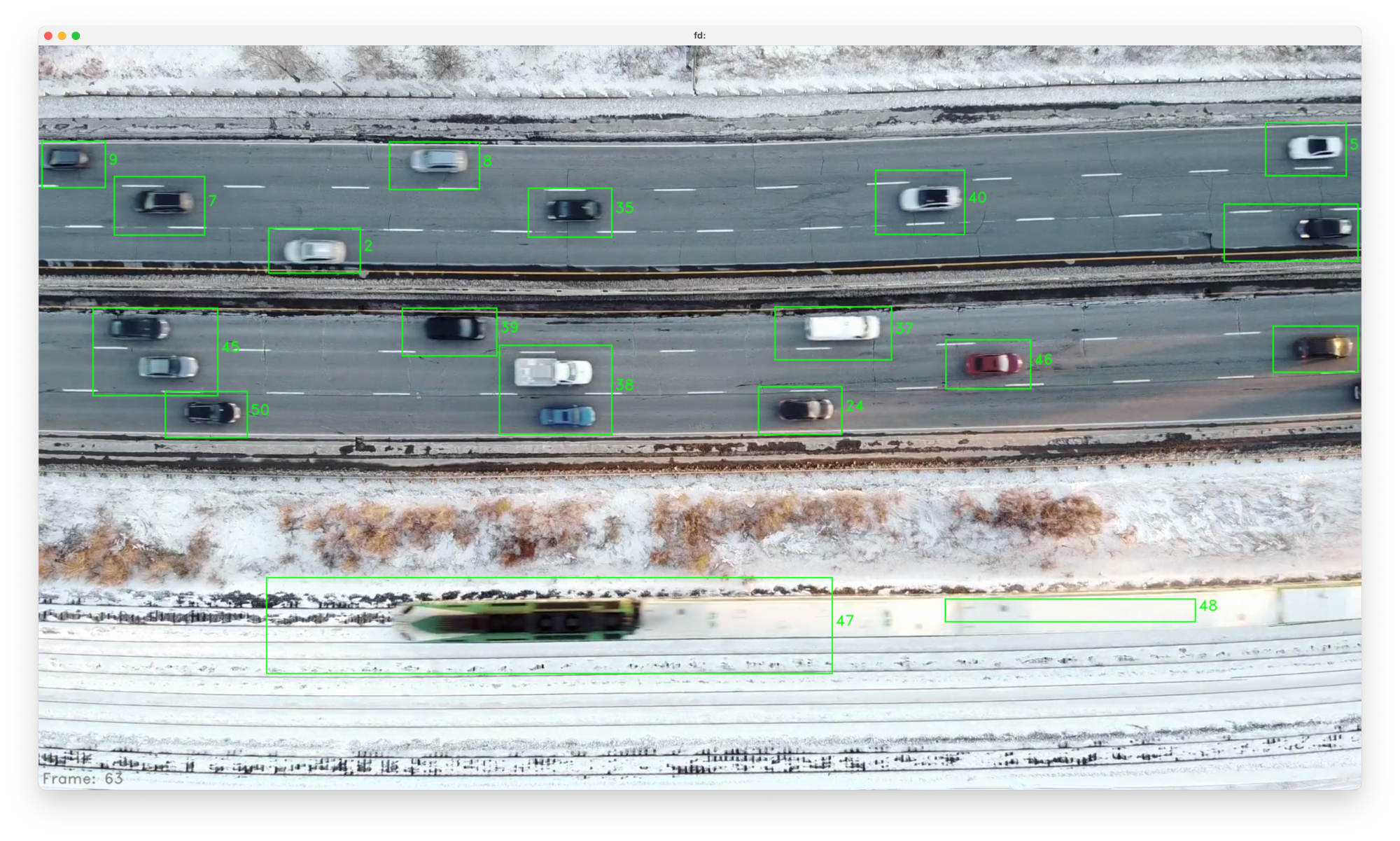
The contest is built around a streaming image processing pipeline, that performs real‑time motion detection and object tracking on video sequences. A reference implementation in C is provided in the repository; you may replace or re‑implement any part of the pipeline as long as the required detection‑tracking performance is met.
Participants have the choice between 1) developing a completely redesigned application (for instance using DNNs) or 2) optimizing the provided building blocks. Option 1) is intended for computer vision specialists, whereas option 2) is more accessible to competitors new to the field who have knowledge of code optimization. At the time of writing this competition, it is unclear which of the two approaches is better, and that is precisely why it is interesting to choose one strategy or the other.
Redesigned applications must use the same input/output interfaces as those provided by the reference implementation.
The following diagram shows the basic building blocks of the reference application:
| Step | Purpose | Typical Algorithm (baseline) |
|---|---|---|
| 1. Motion detection | Identify pixels that change from one frame to the next | ΣΔ (Sigma‑Delta) background subtraction |
| 2. Denoising | Clean the binary mask and reduce false positives | Morphological opening/closing |
| 3. Connected‑component labeling | Extract individual blobs representing moving objects | CCL + CCA |
| 4. Data association | Link blobs across consecutive frames | k‑NN (nearest‑neighbour) |
| 5. Track maintenance | Keep a history of object trajectories | Sliding‑window list of tracks |
Inputs & Outputs
TBD
Evaluation Constraints
- Detection & tracking rates – All submissions must meet the target rates specified in the evaluation sheet (TBD)
- Performance focus – Improving these rates beyond the targets does not influence the ranking; the emphasis is on energy‑efficient throughput.
Participants may modify or replace any stage of the pipeline, but must preserve the same input‑output interface to ensure fair comparison.
Repository
To start to optimize, please fork the following repository on GitHub:
4. Contest Schedule
| Stage | Description | Deadline |
|---|---|---|
| Opening | Contest announcement | 10 Feb. 2026 |
| Registration | Account creation on Dalek, team description | 01 Jul. 2026 |
| 1st code submission | Submission of a first version of the modified source code with short description to run it (this step will help us to test if the code is working well and to give some feedback if there is something wrong) | 01 Jul. 2026 |
| Final submission | Submit optimized source code, a short description to run it and a short paper (max. 4 pages double column) to describe algorithmic choices and performance overview | 15 Oct. 2026 |
| Results | Ranking table & winners announced during a special workshop session | 4 Nov. 2026 |
5. Submission Requirements
| Item | Format | Notes |
|---|---|---|
| Source Code | Forked GiHub repository with C/C++ files and CMakeLists | Must compile on Linux (Ubuntu 24.04 and on Dalek). |
| Evaluation Script | Bash or Python script that launches the binary and collects performance metrics | Must be compatible with SLURM. |
| Documentation | README with compilation instructions and parameters usage | |
| License | MIT/Apache‑2.0 (or similar open‑source license) | All code must be publicly available (at the end of the contest). |
Important – Any algorithmic changes beyond the reference implementation are welcome, but you must retain the same input/output interface to ensure fair comparison.
6. Prizes & Recognition
| Category | Prize | Award |
|---|---|---|
| Overall Winner | [TBD] | Trophy + Certificate |
| Best Energy‑Efficient Implementation | [TBD] | Trophy + Certificate |
| Honorable Mentions | [TBD] | Certificates |
Exact prize amounts and additional rewards will be announced in the final call.
7. Contact & Support
- Organizer – Adrien CASSAGNE, Ass. Prof. @ Sorbonne University, Paris
- Discord – Participants will be automatically invited
- FAQ & Help Desk – https://dalek.proj.lip6.fr/user_contact/
Feel free to reach out before the submission deadline if you have any technical questions or need clarification on the rules.
8. How to Join
Registration is now open!
Please note: The registration deadline is aligned with the 1st code submission deadline. Simply put, registration is only considered valid once we have received your initial code modification.
Here is the registration process:
-
Sign Up: Send an email to: sips26-sw-optim-contest@listes.lip6.fr.
Your email must include:- The name of the team,
- Team member names, their affiliations, and their emails.
- Receive your unique Dalek account credentials and get invited to the Discord channel with all the competitors.
- Fork and Optimize: Fork the reference repository on GitHub, experiment, and submit your optimized solution before the deadlines.
- To meet the 1st code submission deadline, please reply to the email above with the link to your forked GitHub repository.
- Privacy Tip: If you prefer to keep your repository private to avoid competitors accessing your code, please add the organizer (Adrien Cassagne, « kouchy » on GitHub) as a collaborator to maintain privacy.
Good luck, and we look forward to your innovative, energy‑efficient solutions!